
Global (En)
Contact us
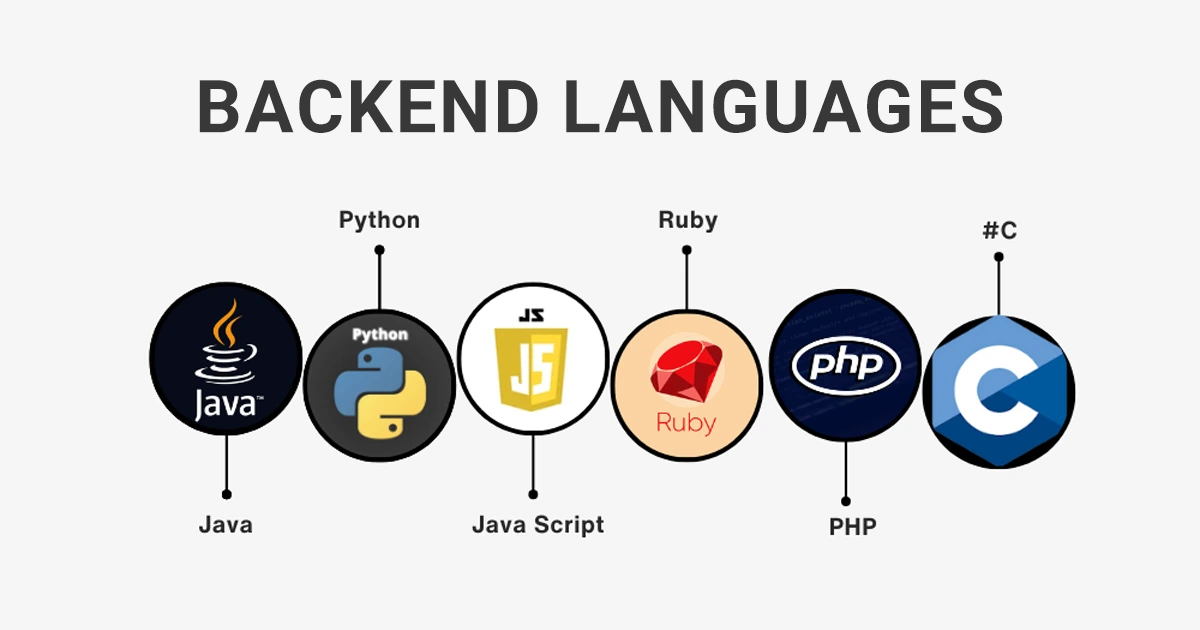
As software seeps into all industries-from health to finance to logistics need for stable, flexible, and high-performing backend languages has become eminent. 2025 witnesses a great convergence of mature and modern languages vying for this demand. This blog covers the leading backend languages list and frameworks, explaining their strengths and use cases and why you should include them in your development strategy.What Are the Backend Languages?Backend languages are programming languages used to create the server side of an application. This portion of the software deals with business logic, database interaction, user authentication, etc. Backend development is different from frontend development, which deals with user interfaces, in that it ensures data is securely and efficiently processed.The backend languages and frameworks form the backbone of web and software development. These combinations control the requests made to and from the frontend, carrying out appropriate actions in response.Also Read: Frontend vs Backend Development: Key Difference & What to Learn FirstThe 11 Best Backend Programming Languages in 2025Here is an updated curated backend languages list for 2025, concerning industry relevance, demand, performance, and developer community support.JavaScript (Node.js)JavaScript is not fading away slowly anymore. It proves to be an extremely competent language at the back-end because of Node.js.Use Cases: Real-time applications, APIs, microservices, serverless architecture.Why in 2025? It still measures up as one of the cheapest and most dependable solutions for a complete JavaScript stack environment for startups.Popular Frameworks: Express.js, NestJSPythonThe same two reasons still hold; simple structure and readability make Python in a class of its own in the technology landscape.Use Cases: Web development, machine learning backends, data-driven applications.Why in 2025? All the flexibility and numerous frameworks associated with it, like Django or Flask, keep it in the big league. Popular Frameworks: Django, Flask, FastAPIJavaIt is old, but it continues to be a popular backend language even today. Use Cases: Enterprise Applications; Android Backends; Banking Systems. Why in 2025? Scalability and object-oriented approaches still keep it tall among these clouds of enterprise interest. Popular Frameworks: Spring Boot, Jakarta EETypeScript. Node + TSTypeScript is, by its nature, an enhanced JavaScript language that adds value to code quality and experience using static typing in development.Use Cases: Large-scale applications, microservices and real-time systems. Why in 2025? Type safety and seamless integration with Node.js provide a major boost to developer productivity and diminish bug numbers. Popular Frameworks: NestJS; Express.js with TypeScript supportGo (Golang)Go was developed by Google. It is a programming language famous for performance, concurrency, and simplicity.Use Cases: Cloud-native apps, microservices, APIs, and CLI tools. Why in 2025? Its speed and memory efficiency enable it to nestle nicely in containerized environments based on Kubernetes.Popular Frameworks: Gin, Echo, FibreKotlinKotlin was initially developed for Android, but it seems to be making serious inroads to server-side programming. Use Cases: Apps for the web, for microservices, full-stack Kotlin applications. Why in 2025? Kotlin’s ability to interoperate with Java and its clear syntax provide a modern alternative to Java backends. Popular Frameworks: With Ktor, Spring Boot (with Kotlin support)Also Read: Static vs Dynamic Websites: Which One is Right for Your Business?RubyThis is the language, mostly along with its most famous framework, Ruby on Rails, which makes Ruby continue to be favoured by beginners and MVP creators. Use Cases: SaaS products, eCommerce platforms, rapid prototyping. Why in 2025? While not the greatest these days, its convention-over-configuration approach guarantees speedy development cycles. Popular Frameworks: Ruby on Rails, SinatraPHPOnce considered the leading backend language, PHP is still widely used somewhere in the world, especially on content-driven sites. Use Cases: CMS platforms, blogs, eCommerce systems. Why in 2025? PHP has not gone away even after the heavy usage of WordPress and Laravel, as it is enough for many small-to-average applications. Popular Frameworks: Laravel, Symfony, CodeIgniter RustThe trend towards being a lettered programming language is significantly growing for Rust in terms of safety and high performance as a backend.Use Cases: System-level services, web servers, and performance-critical APIs.Why in 2025? Memory safety and concurrency features make Rust just perfect for mission-critical applications. Popular Frameworks: Actix, RocketC# (.NET Core)Microsoft C# and .NET Core (currently .NET 8) will lead back-end development into many scenarios for cross-platform, cloud-ready applications. Use Cases: Enterprise applications, APIs, games via Unity, cross-platform backends. Why in 2025? C# stands to gain a lot with the boost to performance, support for cloud-native applications, and smooth integration with Azure. Popular Frameworks: ASP.NET Core; BlazorScalaIt is both object-oriented and functional, and runs smoothly on the Java Virtual Machine (JVM). Use Cases: Big Data processing, Real-time analytics, concurrent systems. Why in 2025? Adopted in most data-intensive environments, such as Apache Spark. Popular Frameworks: Play, Akka, ScalatraAlso Read: Web App vs Website: What’s the Real DifferenceBackend Languages List and Frameworks: How to ChooseThe selection of a suitable backend language is largely determined by the project requirements, scalability needs, and the talent pool available for the task. Here is a basic comparative analysis.LanguagePerformanceLearning CurveCommunity SupportBest ForNode.jsMediumEasyExcellentAPIs, real-time appsPythonMediumVery EasyExcellentML, web appsJavaHighMediumStrongEnterprise systemsGoVery HighMediumGrowingScalable microservicesPHPMediumEasyLargeCMS, small websitesRustVery HighHardGrowingSystem-level softwareKotlinHighEasy (for Java devs)GrowingJava replacementRubyMediumEasyModerateRapid MVPsC#HighMediumStrongEnterprise, desktop, cloudScalaHighHighNicheBig data pipelinesTypeScriptMediumEasyGrowingLarge JS-based appsFuture Trends in Backend DevelopmentThe backend ecosystem in 2025 is evolving toward lighter, more scalable, and cloud-native development environments:Serverless architecture: Languages such as Node.js and Go see widespread applicability in serverless frameworks such as AWS Lambda and Azure Functions. Containerization: Go, Rust, and Java are well-matched for Docker/Kubernetes.AI & Machine learning integration: When it comes to the ML-related backend service, the Python language is still the king.Cross-Platform Backends: Kotlin, C#, and TypeScript lessen the friction of building backends that talk nicely with mobile and frontend technologies.ConclusionIf you want to become a backend developer or you are a CTO mapping your tech stack for the next big thing, knowing your top 10 backend languages-11 in this case-becomes imperative in 2025. From Python’s ease of use to Rust’s sheer speed, each language’s strong point serves a slightly different business goal or project type.This curated backend languages list answers the question of what backend languages are and also elaborates on how choosing the right one can contribute significantly to the reliability, speed, and scalability of your application.Frequently Asked Questions
1. Which are the most commonly used backend languages in 2025?
+
The most used backend languages in 2025 include Python, Java, JavaScript (Node.js), Go, and C#.
2. Which is the beginner-friendly backend language?
+
Because of its easy-going syntax and huge community support, Python is mostly suggested for beginners.
3. What are the backend languages and frameworks?
+
Backend languages are the programming languages used for writing server-side logic, while frameworks are considered tools that provide reusable code, components, and structures to ease the development (like Django for Python).
4. Is PHP still valid in 2025?
+
Yes, PHP remains a relevant option, especially for legacy systems and content-based websites such as WordPress.
5. Which backend language is best for performance?
+
Languages such as Go and Rust provide optimum performance and are preferred in environments prized for low latency.
Healthcare is a competitive industry, both in small towns and large cities, and without solid digital marketing strategies for healthcare, your chances are pretty low. People have more options than ever for healthcare, so you should separate your business from everyone else with the right digital marketing strategies for healthcare companies. This way, you can […]
Online shopping has fully replaced our traditional methods of shopping, especially through social media marketing for fashion brands. Although we stopped wasting hours in shopping malls, the situation has made us way lazier; as it is incredibly simple to shop and stay up-to-date on fashion trends thanks to social media marketing. Additionally, a brand new […]
Instagram isn’t just a place to share photos anymore. Users type queries into the Instagram search bar to find businesses, creators, and content. Posts can also appear in Google search results.That means if you’re not thinking about Instagram SEO, you’re missing out on visibility. The good news is, you don’t need advanced tactics to get […]
What will actually shift patient behavior and brand preference in healthcare marketing? As marketers and agency teams, we need approaches that respect regulation, build trust, and deliver measurable growth. Below, you will find eight widely known campaigns, along with their strengths and the tactics you would reuse. What’s Inside Why Healthcare Marketing Requires a Unique […]
Explore our newest additions to the largest digital marketing library of on-demand courses. They’re all included in the All Access Pass and keep you ahead in the fast-paced, ever-evolving world of digital marketing. Stop guessing your ad spend. Learn how to set the right budget, control costs, and boost performance with Meta’s Advantage+ tools. Search […]

Healthcare is a competitive industry, both in small towns and large cities, and without solid digital marketing strategies for healthcare, your chances are pretty low. People have more options than ever for healthcare, so you should separate your business from everyone else with the right digital marketing strategies for healthcare companies. This way, you can […]
Learn more
Online shopping has fully replaced our traditional methods of shopping, especially through social media marketing for fashion brands. Although we stopped wasting hours in shopping malls, the situation has made us way lazier; as it is incredibly simple to shop and stay up-to-date on fashion trends thanks to social media marketing. Additionally, a brand new […]
Learn moreWe partner with industry leaders and open-source communities to bring you world-class solutions. Our collaborations allow us to integrate the latest models, infrastructure, and techniques into our enterprise-grade offerings.