
Global (En)
Contact us
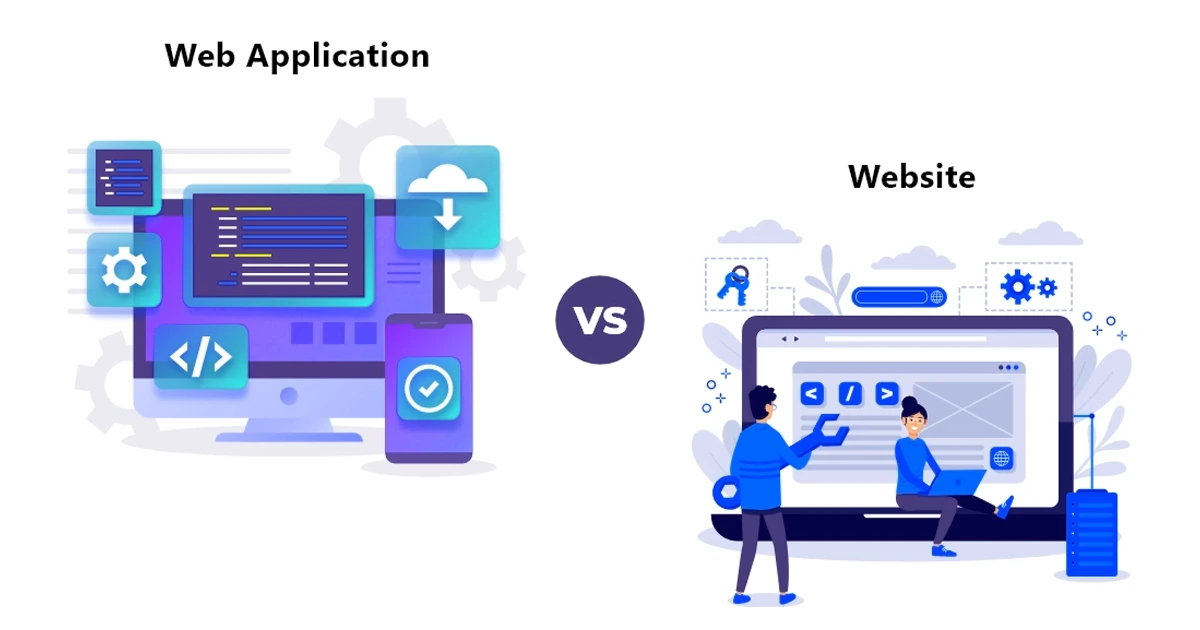
Over 60% of business workflows are predicted to be conducted via a web-based platform by the end of 2025, according to some analysts. Are all platforms similar? Not really. The distinction between a website and a web application—often discussed as web app vs website—is no longer just an IT discussion, but a foundational aspect of a digital strategy.Therefore, while a traditional website can establish an online presence, a custom web app can do much more: automate operations, personalize user journeys, and develop new revenue models. The decision between the two is not about choosing the one that looks best or costs the least; rather, it is about the architecture that meets your business purposes, customer expectations, and growth over time.This blog will clear up the difference between a web application and a website and help you determine which is right for your business in 2025—and beyond.What Is a Website?A website is made of static pages or dynamic pages that can be accessed through domain names. Therefore, its primary purpose is to deliver content and information to other people. Some instances of websites include company websites, blogs, news portals, and portfolio sites.A website is usually:InformationalOpen to public accessContent-orientedLess interactive (although some may have dynamic elements)Usually has common features:Home, About, Services, and Contact pagesEmbedding videos, forms, and imagesSearch engine optimized contentResponsive to mobileExamples:Homepage of a law firm.An e-commerce product catalogue (without real-time updates).And news platforms like the BBC or CNN.Also Read:Static vs Dynamic Websites: Which One is Right for Your Business?What Is a Web App?A web application (or web app) is a program to run on a web browser, and, simultaneously, be highly interactive and user-customizable. Web apps have more resemblance to software tools than websites in the execution of complex workflows and handling user input.So, what is an example of a web app? A web app can be a platform for logged-in users to perform tasks, change data, and receive feedback in real-time.Common Characteristics:Interactive and user-drivenRequires authenticationBackend database integrationIncludes dashboard(s), form(s), analytic tools, and workflow systemsExamples of Web Apps:GmailGoogle DocsTrelloOnline banking platformsCustomer Relationship Manager apps such as HubSpot or SalesforceWebsite and Web Application Difference: What to KnowIt’s essential to contrast a website against a web app against several criteria to ensure an informed decision.FeatureWebsiteWeb ApplicationPurposeInformationalFunctional/TransactionalUser InteractionMinimalHighAuthenticationUsually not requiredOften mandatoryComplexitySimple to moderateHighDevelopment TimeRelatively shortRequires more time and resourcesMaintenanceLowerHigher (due to updates, testing)ExamplesCorporate websites, blogsSaaS platforms, ERPsCan a Web App Be a Website?Can we formulate a question that is frequently asked: “Can a web app be a website?” Yes, they are not mutually exclusive.Of course, nowadays, many platforms have created a combination of both. A web application can provide public-facing access to its website, as well as private entry into tools made available on a login basis for registered users. For instance, the e-learning site may offer the general public course descriptions only, but give its enrolled students a personalized dashboard and learning modules.Also Read: Frontend vs Backend Development: Key Difference & What to Learn FirstIs a Web App Better Than a Website?There is no right or wrong answer. Depending on your business goals, a web app can be better than a website and vice versa.When a Website May be the Better Option:You will require an online presence containing simple business informationYour content is mostly staticUser authentication is not neededSEO and generating leads are prized above allIdeal for: Local businesses, consultants, service providers, bloggers. When a Web App Makes Sense:You provide some kind of service requiring interactivity (example: SaaS tool, dashboard)Users need to register/log inYou want real-time data processing or integrationsYou are creating custom workflows or automationIdeal for: Tech startups, internal business tools, fintech platforms, CRMs.Why 2025 Demands a Smarter Choice?In an age where every second business seems to have a website, the digital ecosystem of 2025 requires more than just that. User expectations, business scalability, and data-driven operations have become second nature. This is precisely why web app or website decisions have become a most vital option today:Hyper-PersonalizationModern users demand a tailored experience. A web application can change its content and features to suit different user roles, preferences, and behaviour, whereas a static website is usually not capable of doing so.ScalabilityBusiness moves fast, and growth is often unpredictable. Web apps provide better scalability and can grow together with your user base.Mobile-First MindsetBy 2025, users will rely heavily on smartphones to access platforms. An uninterrupted user experience is provided by a web app that works like a mobile app (PWA).Data Security and ComplianceEssentials become secure login systems and encrypted data flows-standard practice for web apps-in conjunction with laws like GDPR and India’s DPDP Act.Automation and IntegrationOn one end, there is the integration of CRM, and on the other end, there is automation of marketing campaigns. All this is what businesses want when it comes to the connection of systems.Web applications are built for this type of integration.Cost Comparison: Website vs Web App for BusinessesTypeDevelopment CostMaintenance CostROI PotentialWebsiteLowerLow to ModerateModerateWeb AppHigherModerate to HighHigh (if usage is strong)A website doesn’t take long to set up and can be done cheaply, while web apps cost more to develop but return their investment over time in efficiency, user engagement, and scalability.Choosing What Is Right for Your BusinessQuestions to Ask Yourself: Do you want to have interaction with your platform?Do you want authentication, role-based access, or user dashboards?Do you have any plans to expand quickly?If your answers seem inclined towards content and visibility, then you would prefer a website. If the primary objectives are functionality, interaction, and automation, though, then the best choice would probably be a web application.In Conclusion: Website vs Web App—Which One Fits Your Strategy Best?The debate web app vs website is not about which one’s better, but about which one fits your business objectives most closely. A website is the best solution for creating credibility, attracting traffic, and sharing information. On the contrary, a bespoke web app provides interactive facilities, efficiency, and user engagement to an organization. All these enhance the competitive edge in the market, like that of 2025.Your digital foundation is increasingly important today, whether you are a startup, SME, or enterprise. Choose wisely today, for tomorrow.Frequently Asked Questions
1. What is a web app?
+
An application software that can perform tasks, access data, and interact with features in real-time for users through a web browser is known as an interactive web application.
2. Examples of web apps?
+
Some examples include Gmail, Google Docs, Slack, Notion, and various CRMs like Salesforce.
3. Differences between a website and a web application?
+
Websites are primarily content-based and focus more on information. While web applications are dynamic, interactive, and created for specific tasks.
4. Is a web app better than a website?
+
Yes, it depends. When it comes to a business flow or user interaction, a web app is better. In terms of providing information and SEO, a website is better.
5. Can a web app serve as a website?
+
Yes, many will do either or both. Static content is presented to visitors but provides dynamic tools for logged-in users.
Healthcare is a competitive industry, both in small towns and large cities, and without solid digital marketing strategies for healthcare, your chances are pretty low. People have more options than ever for healthcare, so you should separate your business from everyone else with the right digital marketing strategies for healthcare companies. This way, you can […]
Online shopping has fully replaced our traditional methods of shopping, especially through social media marketing for fashion brands. Although we stopped wasting hours in shopping malls, the situation has made us way lazier; as it is incredibly simple to shop and stay up-to-date on fashion trends thanks to social media marketing. Additionally, a brand new […]
Instagram isn’t just a place to share photos anymore. Users type queries into the Instagram search bar to find businesses, creators, and content. Posts can also appear in Google search results.That means if you’re not thinking about Instagram SEO, you’re missing out on visibility. The good news is, you don’t need advanced tactics to get […]
What will actually shift patient behavior and brand preference in healthcare marketing? As marketers and agency teams, we need approaches that respect regulation, build trust, and deliver measurable growth. Below, you will find eight widely known campaigns, along with their strengths and the tactics you would reuse. What’s Inside Why Healthcare Marketing Requires a Unique […]
Explore our newest additions to the largest digital marketing library of on-demand courses. They’re all included in the All Access Pass and keep you ahead in the fast-paced, ever-evolving world of digital marketing. Stop guessing your ad spend. Learn how to set the right budget, control costs, and boost performance with Meta’s Advantage+ tools. Search […]

Healthcare is a competitive industry, both in small towns and large cities, and without solid digital marketing strategies for healthcare, your chances are pretty low. People have more options than ever for healthcare, so you should separate your business from everyone else with the right digital marketing strategies for healthcare companies. This way, you can […]
Learn more
Online shopping has fully replaced our traditional methods of shopping, especially through social media marketing for fashion brands. Although we stopped wasting hours in shopping malls, the situation has made us way lazier; as it is incredibly simple to shop and stay up-to-date on fashion trends thanks to social media marketing. Additionally, a brand new […]
Learn moreWe partner with industry leaders and open-source communities to bring you world-class solutions. Our collaborations allow us to integrate the latest models, infrastructure, and techniques into our enterprise-grade offerings.